SKIN ELASTICITY

Over time, your skin changes — that's only natural.

As we age, our skin begins to show the first signs of aging. This often makes the complexion appear tired and somewhat dull: fine lines, less defined contours, and a loss of firmness and elasticity.

Everyday influences such as stress, UV radiation, or lack of sleep can also slow down the skin's natural regeneration process.

To restore your skin's firmness, you can specifically support its ability to renew itself and improve its elasticity – for a fresh, youthful appearance.

Internal factors that affect skin elasticity include...

As we age, our bodies produce less collagen and elastin—two important proteins responsible for skin tone and elasticity. In addition, UV radiation weakens connective tissue, leading to wrinkles and loss of firmness.

Genetic predisposition plays a major role in how firm and elastic the skin is by nature and how quickly it ages.

The skin can lose elasticity, especially during menopause or hormonal imbalances.

EXPERTS EXPLAIN

Our study designs for investigating skin elasticity

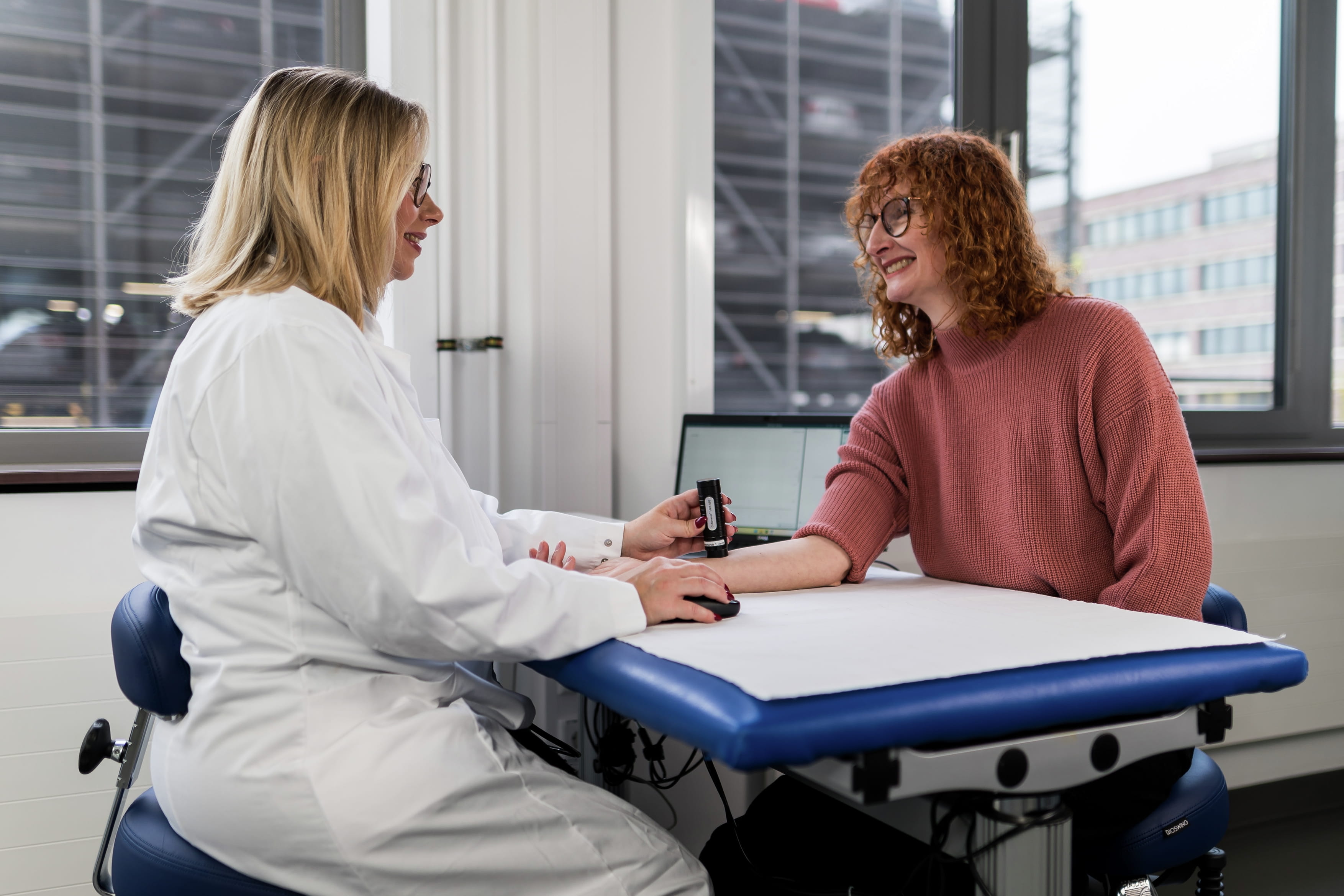
In our efficacy studies, we combine technical measurement methods with the assessments of experts and participants to obtain a comprehensive picture of the product's effectiveness on the skin.

Through objective assessments by experts or participants, visible and/or tangible skin characteristics are evaluated using descriptive scales. In addition, extensive questionnaires and subsequent calculation of approval rates can be used to classify product properties.

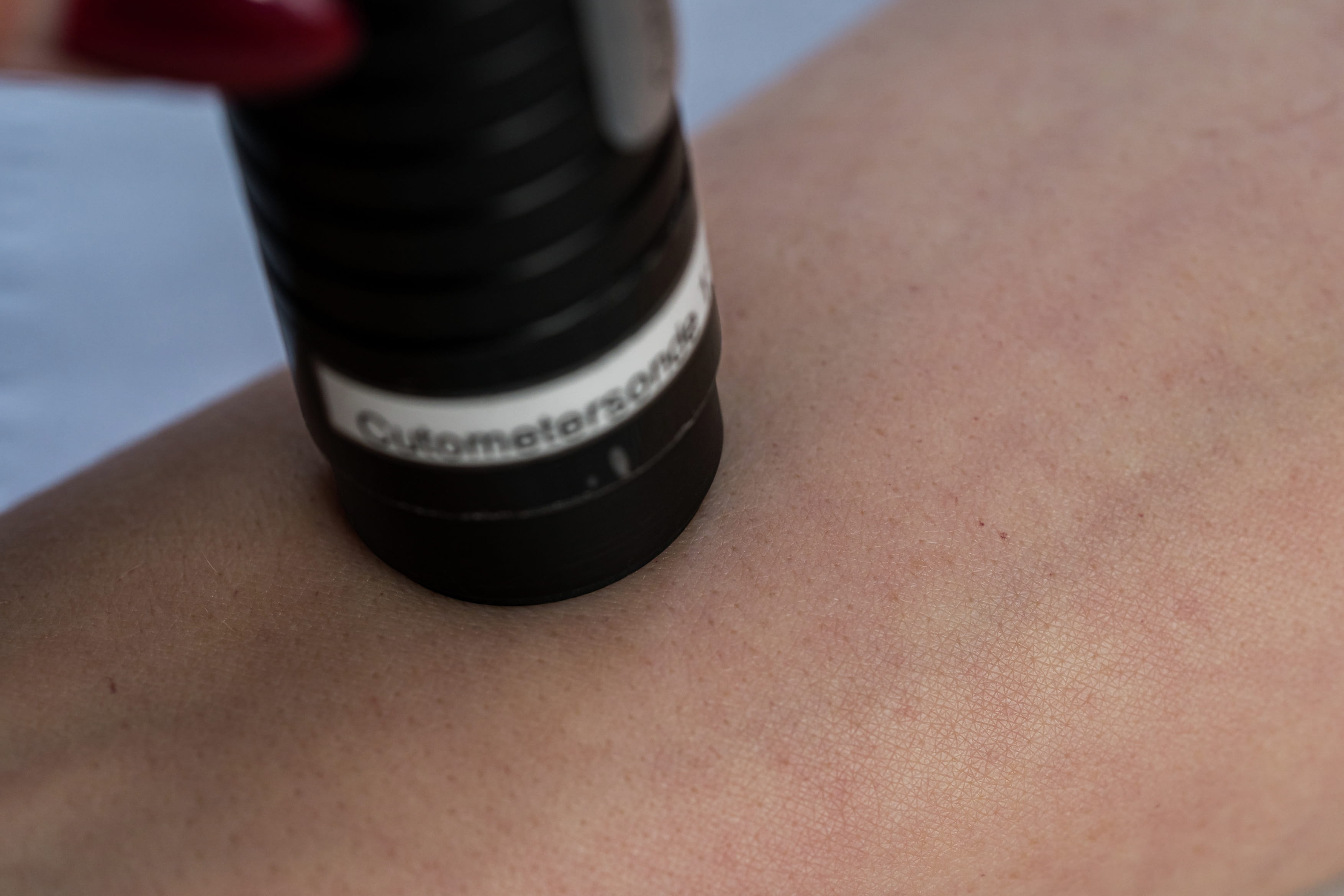
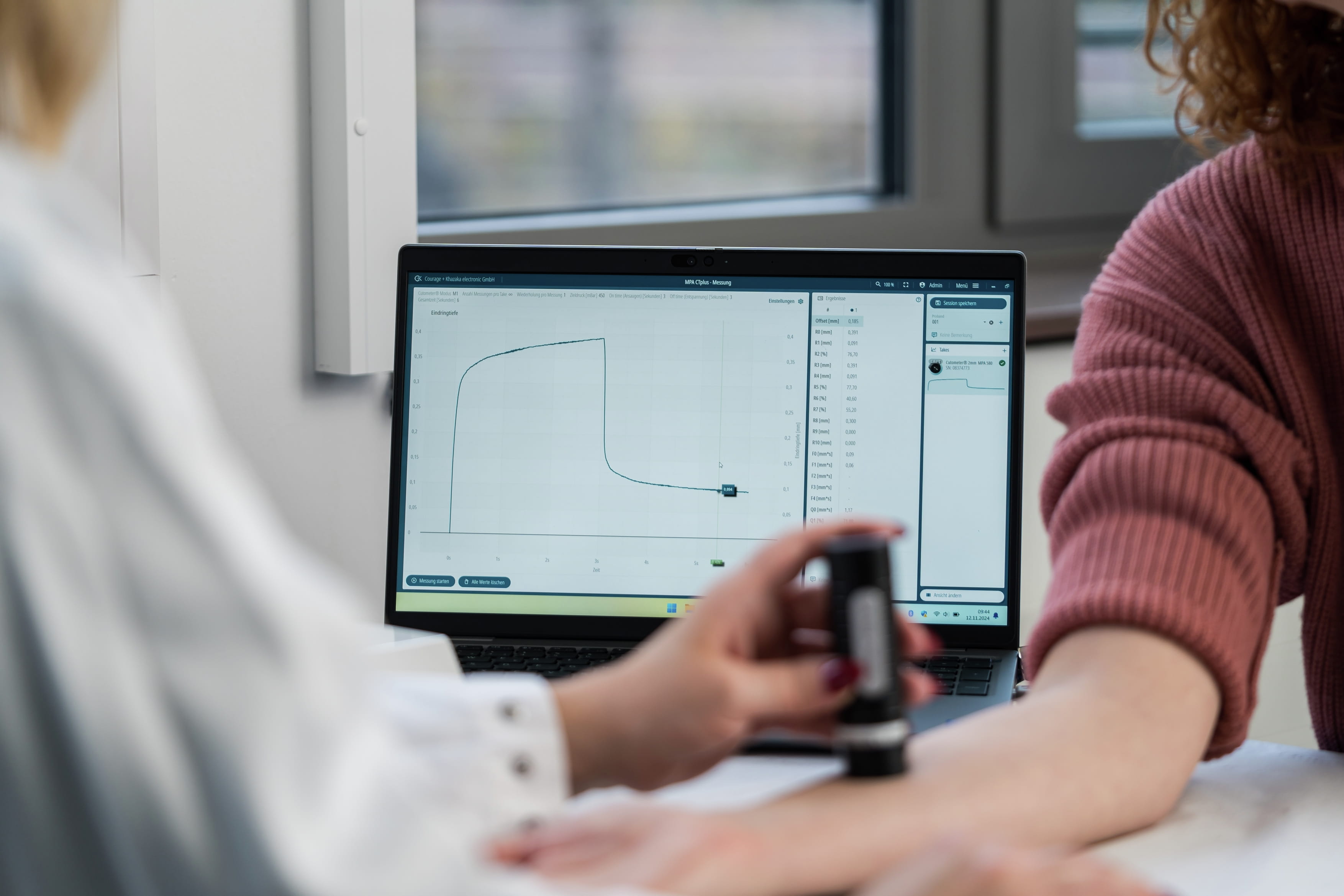
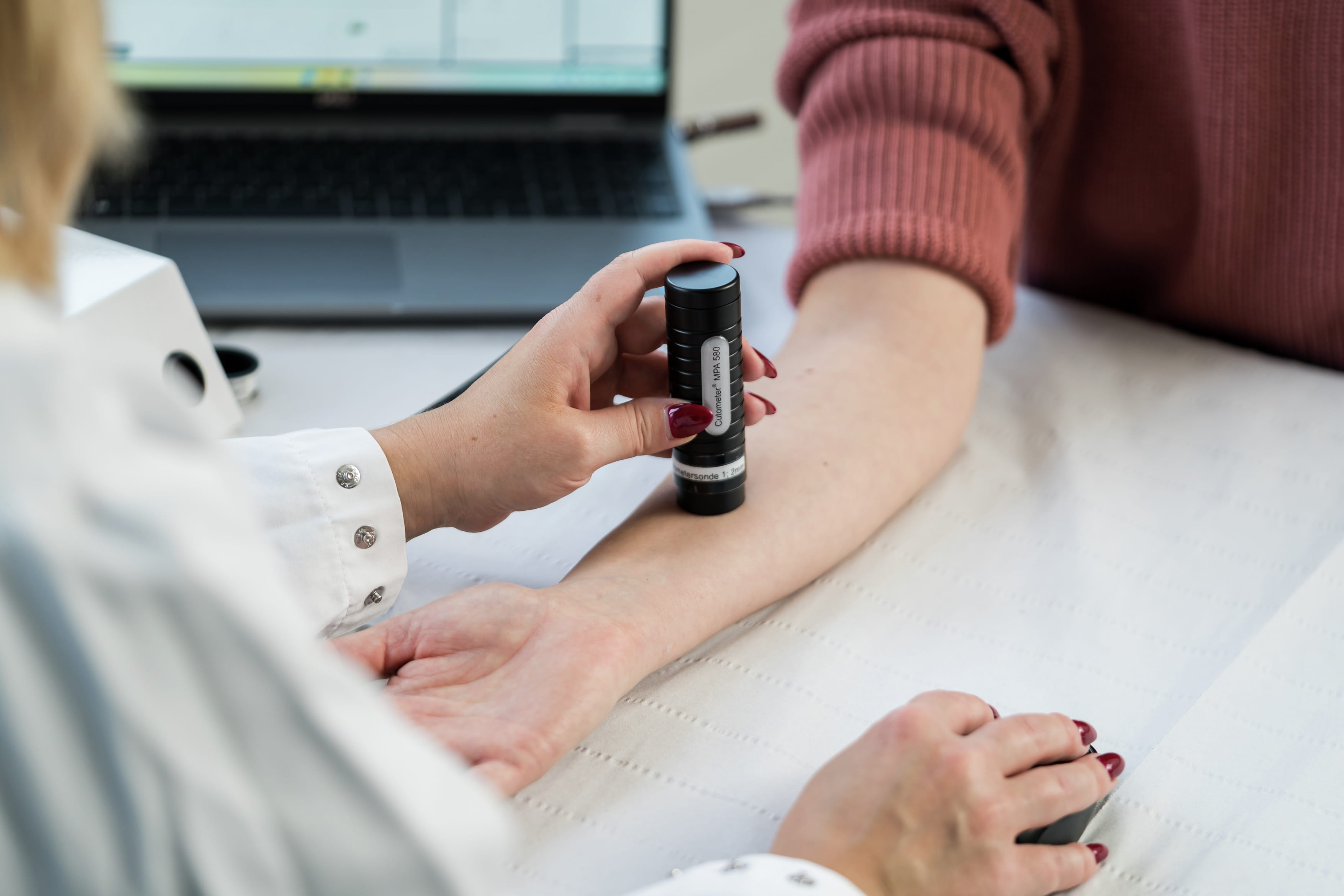
The viscoelastic properties of the skin are objectively recorded — i.e., how the skin behaves when stretched and then relaxed. The measuring device we use to determine skin elasticity is called a Cutometer, which provides valuable information about the elastic and mechanical properties of the skin's surface.

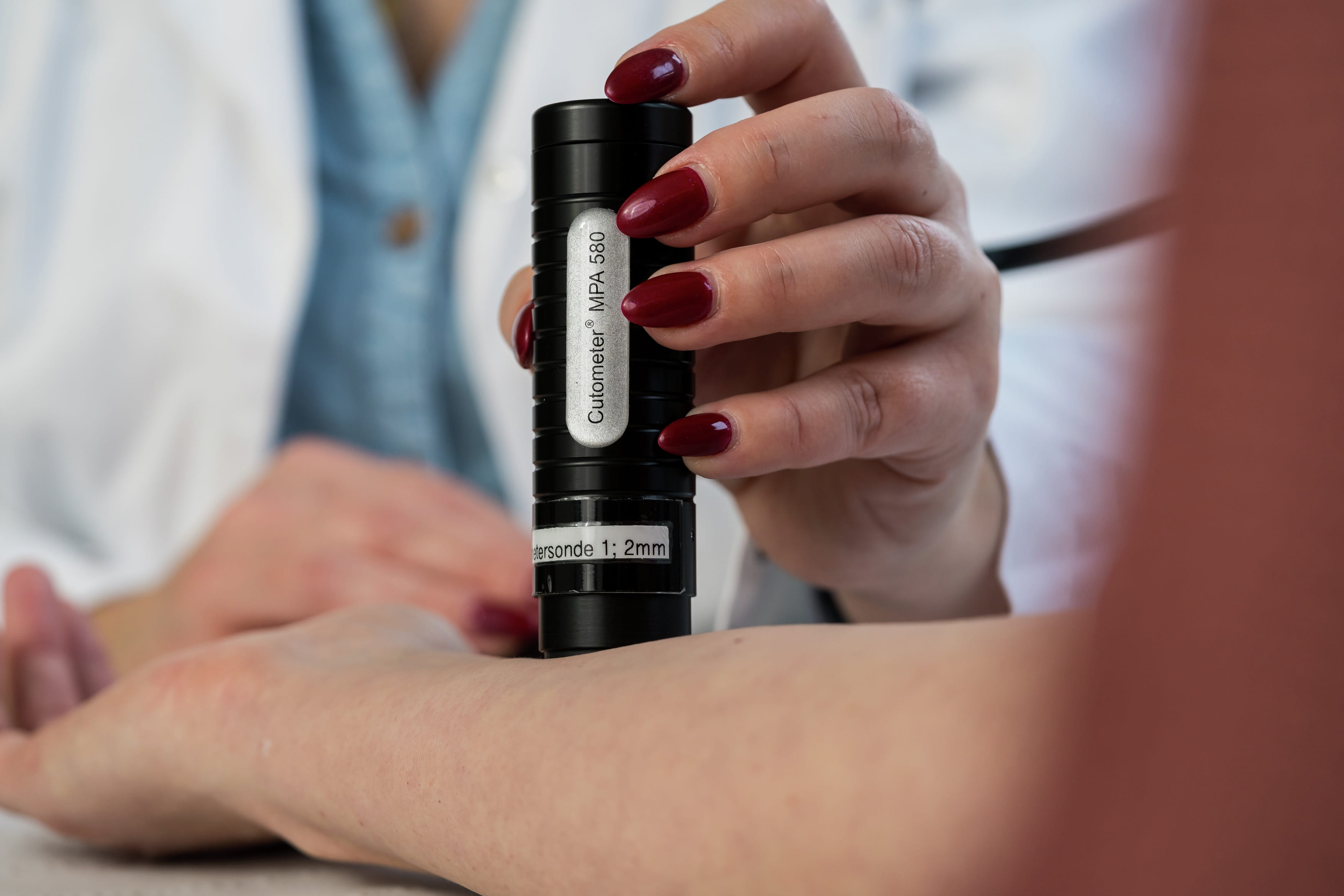
Method for measuring skin elasticity

To do this, negative pressure is generated, which sucks the skin into the opening of the measuring probe (the Cutometer) for a specified period of time and then releases it again.

During the measurement, the resistance to the negative pressure (skin firmness) and the return to the starting position (skin elasticity) are determined.

Based on these studies, we develop and confirm claims — i.e. advertising statements —
for our products with the help of our study participants.

You can find more information about our products here: